Best Strategy Execution Management Software for 2026
There’s a strategy-to-delivery gap across today’s enterprises.
Many strategy execution tools are built around goal-setting, OKRs, Balanced Scorecard reporting, and review cadence. Those capabilities matter, but enterprise leaders often need to go further: connecting strategic goals to the funding, capacity, and delivery decisions that determine whether strategy actually becomes outcomes.
Aligner stratégie, budget et exécution : les bonnes pratiques SPM
Overcome the barriers threatening your value delivery
Consulter l'e-book • Aligner stratégie, budget et exécution : les bonnes pratiques SPMDémonstration de la solution : Gestion stratégique de portefeuilles
Découvrez comment obtenir une vue claire sur les initiatives stratégiques et donner à votre organisation les moyens d'obtenir des résultats plus rapidement grâce à la gestion stratégique de portefeuilles.
Voir la démo • Démonstration de la solution : Gestion stratégique de portefeuillesSelecting the best strategy execution management software requires looking beyond this static goal-setting. You need a system that links:
- Enterprise strategy
- Portfolio funding
- Real-time execution
This guide covers six top platforms through this strategy-to-funding-to-delivery lens. We treat OKRs and Balanced Scorecards as table stakes and ask what happens after the goal is set.
Points forts
- Match your maturity level: Evaluating software against a maturity ladder helps your team buy the right tool without adding complexity
- Close the execution gap: Platforms that close the loop connect goals to portfolio funding, capacity, and delivery evidence inside one system of record
- Focus on delivery metrics: Connecting strategic objectives to real-time project metrics reduces wasted reporting time while increasing success
- Look beyond basic goals: OKRs and Balanced Scorecards clarify goals and measures, but the harder question is whether funded work is prioritized, resourced, and delivering outcomes
What Strategy Execution Management Software Does
Strategy execution management software is the management system organizations use to set strategic goals and track progress. Ideally, it connects that progress to funding, capacity, and delivery.
Enterprise strategic planning software focuses on OKRs or Balanced Scorecard reporting. They:
- Provide strategic communication across teams
- Structure a quarterly review cadence
- Help leaders organize goal-setting
However, a major gap remains. Most platforms stop at goal tracking and review cadence. They create a strategy dashboard while delivery teams work elsewhere. At the same time, the daily work of strategic execution happens in general project management tools.
This disconnect between strategic planning and daily execution explains why 33% of enterprise transformation efforts fail to deliver expected outcomes post-implementation (source: McKinsey).
True enterprise strategy tools bridge this gap. They’re platforms that connect strategic planning to funding and operational execution.
How To Evaluate: Connecting Strategy, Funding, and Delivery
What should you look for in strategy execution software? The answer depends on your strategy program’s maturity.
OKRs and frameworks like the Balanced Scorecard are basic requirements. They’re the table stakes for setting strategic priorities and tracking a key result or metric. While needed for all maturity levels, they’re not enough to successfully execute large, long-term strategic plans across the organization.
Choosing the right tool requires:
- Assessing your current strategy program’s primary goals and needs
- Evaluating what happens after leadership sets the strategic plan
- Establishing your program’s core focus
Based on these criteria, we’ve found that we can categorize most strategy programs into three distinct maturity levels.
L1: Early-Stage Strategy Programs
Early-stage programs focus on formalizing goal-setting and review cadence across leadership teams.
| Strategic Dimension | Stage Profile |
|---|---|
| Primary Goal | To replace scattered spreadsheets with a structured goal management system |
| Key Needs | Clear strategic communication tools · Clear dashboard views · OKR tracking · Ease of use |
| Core Focus | Establishing consistent strategy reviews and quarterly alignment |
L2: Growth-Stage Strategy Programs
Growth-stage programs connect company-level objectives to specific strategic initiatives.
| Strategic Dimension | Stage Profile |
|---|---|
| Primary Goal | Connect top-level goals to active project execution and operational workflows |
| Key Needs | Cross-team dependency mapping · KPI progress tracking · Capacity planning |
| Core Focus | Balancing agile execution with structured corporate strategy goals |
L3: Established Strategy Programs
Established enterprise programs connect strategic context to portfolio funding and real-time delivery evidence.
| Strategic Dimension | Stage Profile |
|---|---|
| Primary Goal | Maximize value delivery and adapt investments to sudden market shifts |
| Key Needs | Automated delivery tracking · Dynamic scenario modeling · Portfolio funding controls |
| Core Focus | Unifying boardroom strategy with funding, engineering delivery and execution |
Connecting executive vision to active delivery requires clear visibility across every planning horizon. Planview Roadmaps empowers leadership teams to visualize multi-year timelines, evaluate cross-portfolio dependencies, and adapt strategic plans as market conditions shift.
At-A-Glance: Strategy Execution Management Software Compared
The comparison table below outlines how leading platforms stack up across best-fit personas, maturity levels, framework support, and pricing models.
| Plateforme | Best-fit persona | Maturity stage | Framework support | Tarification |
|---|---|---|---|---|
| Planview | C-suite, VP strategy, finance, and PMO leaders connecting goals to funding, capacity, and delivery | L2 – L3 (scalable from L1) | OKRs, scorecard-style planning, Hoshin-style strategy deployment, portfolio funding models | Custom quote |
| ClearPoint Strategy | Balanced-Scorecard-standardized enterprises and public sector | L2 – L3 | Balanced Scorecard | Custom quote |
| Cascade Strategy | Mid-market strategy teams wanting a lighter-weight planning tool | L1 – L2 | OKRs, Balanced Scorecard | Three-tier / Custom quote |
| WorkBoardAI | OKR-driven leadership teams wanting a structured review cadence | L2 – L3 | OKRs | Custom quote |
| Spider Impact | KPI and Balanced-Scorecard performance management teams | L1 – L2 | Balanced Scorecard | Four tiers / Custom quote |
| AchieveIt | Distributed teams executing strategic plans across locations | L1 – L2 | Hoshin Kanri, plan execution tracking | Custom quote |
The Best Strategy Execution Management Software
Choosing the right strategy execution management software requires a close look at your maturity, framework preferences, and governance needs. Here is an evaluation of the six top software platforms available today.
1. PlanviewPlanview connects strategic portfolio management to strategy execution. Built specifically to give leaders the bigger picture, the platform ensures that the goals leadership sets and the funding decisions that follow live in a single unified system.
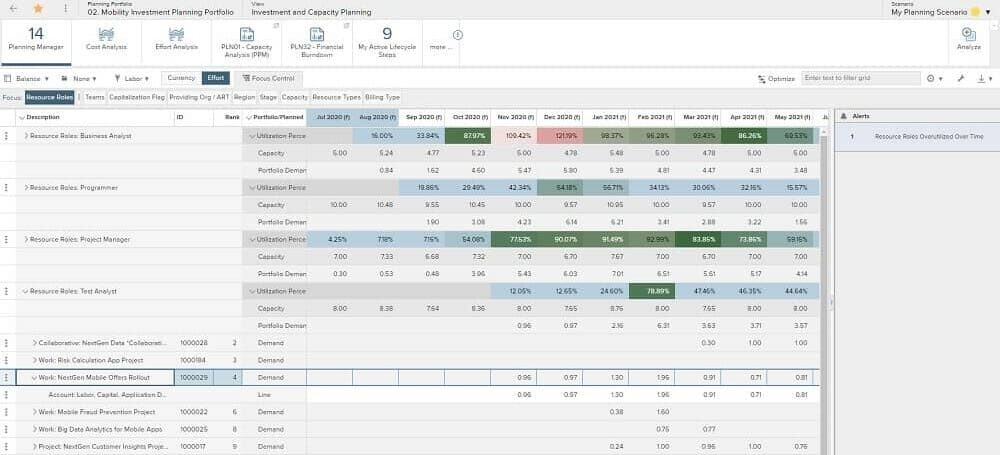
Planview provides complete visibility. It improves executive decision-making by linking boardroom strategy directly to team delivery.
Who It’s Best For
Ideal for C-suite executives, VP strategy leaders, finance leaders, and enterprise PMOs that need to connect strategic goals to portfolio funding, capacity, and delivery. It’s strongest for L2 and L3 organizations, and it scales for L1 programs formalizing goal intake and moving up the maturity curve toward dynamic capital reallocations, portfolio funding controls, and real-time delivery evidence.
Key Differentiator
The portfolio funding and delivery connection sets Planview apart. After leadership defines a goal, the software provides evidence that funded initiatives produce the intended outcome. This system of record ensures that nothing falls through the cracks throughout the entire execution.
Planview stands out among these platforms for connecting strategy execution to portfolio funding, capacity, and delivery in a more integrated enterprise model.
Planview Portfolios provides the foundation for L3 strategy and execution. Planview Roadmaps helps leaders visualize long-term planning horizons and strategic context across teams.
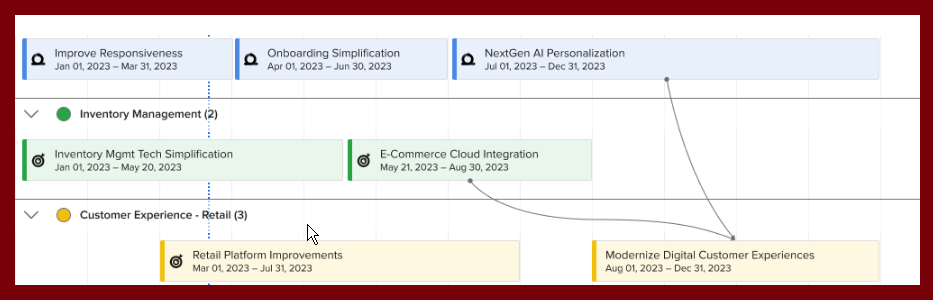
Furthermore, built-in AI features through Planview Anvi deliver predictive risk insights to help leaders make data-driven decisions.
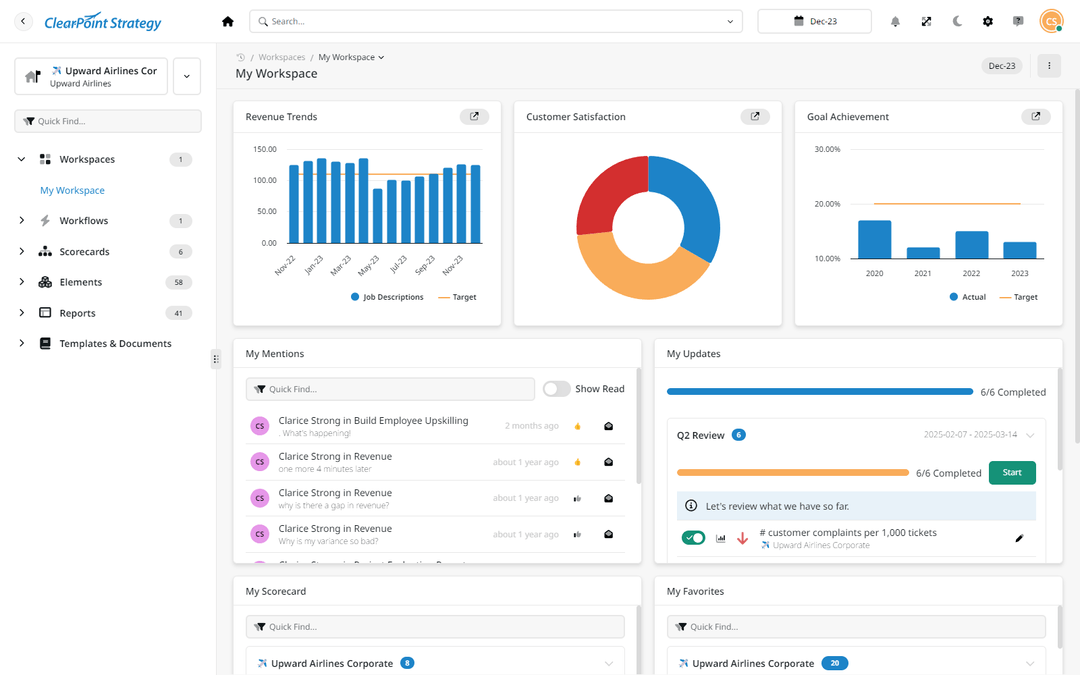
2. ClearPoint StrategyClearPoint Strategy is a strategy management software platform. It centers on Balanced Scorecard reporting and automated strategy reviews.
Who It’s Best For
Ideal for L2 growth-stage and L3 established organizations standardized on Balanced Scorecard reporting. This includes organizations that want strong comparison and benchmarking, such as:
- Administration
- Santé
- Utilities
Key Differentiator
Automated report generation paired with industry-specific benchmarking matrices built for regulated sectors.
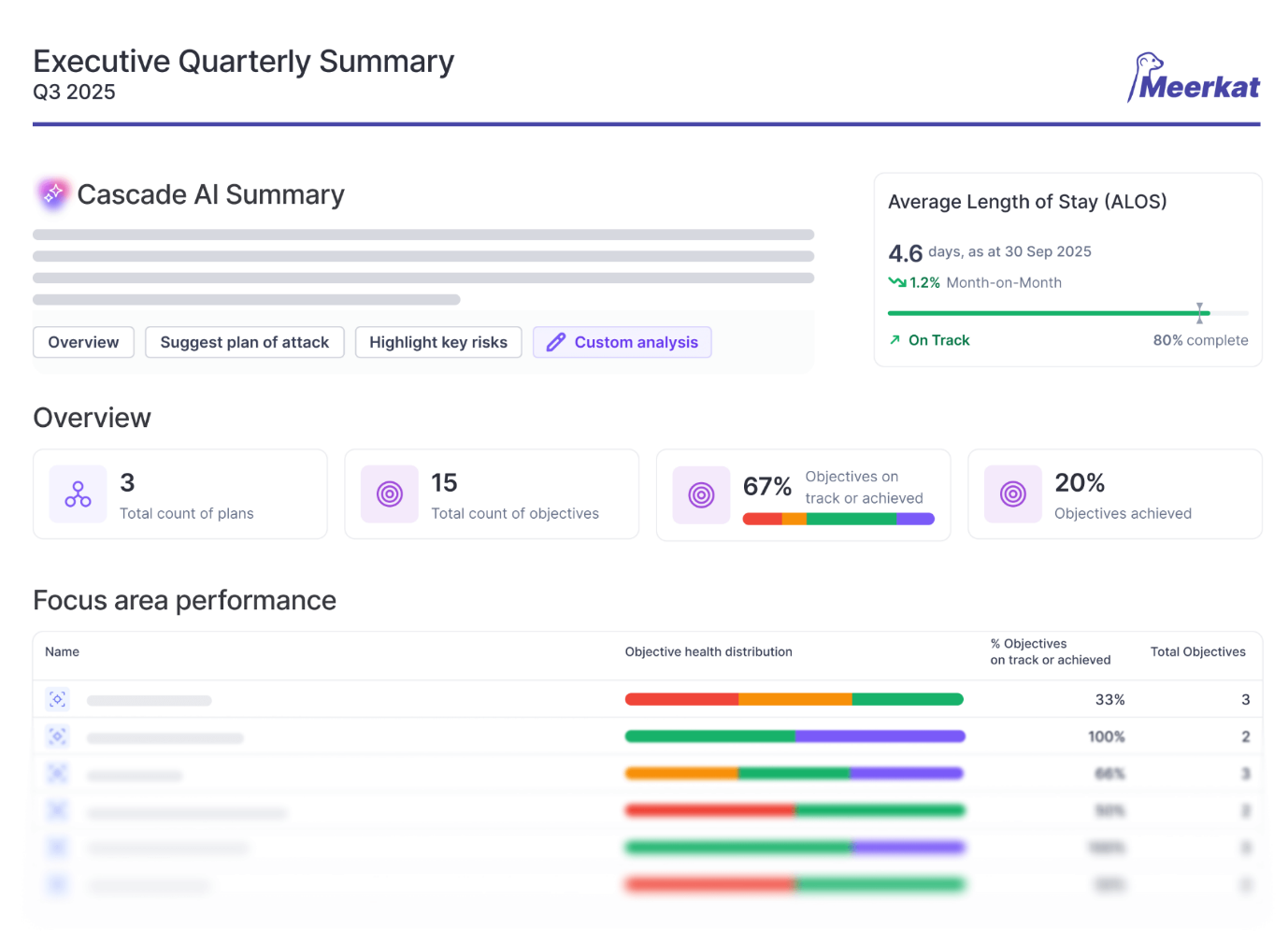
3. Cascade StrategyCascade Strategy is an accessible strategy planning software platform. It helps teams build visual maps to track progress.
Who It’s Best For
Mid-market strategy teams operating at the L1 – L2 level. It fits organizations looking for an intuitive tool to document goals and map initiatives without requiring full enterprise portfolio governance.
Key Differentiator
Flexible visual strategy mapping that offers a fast setup for growth-focused organizations.
4. WorkBoardAIWorkBoard, now WorkBoardAI, offers an OKR-driven management platform. It focuses on establishing a consistent leadership operating rhythm and meeting cadence.
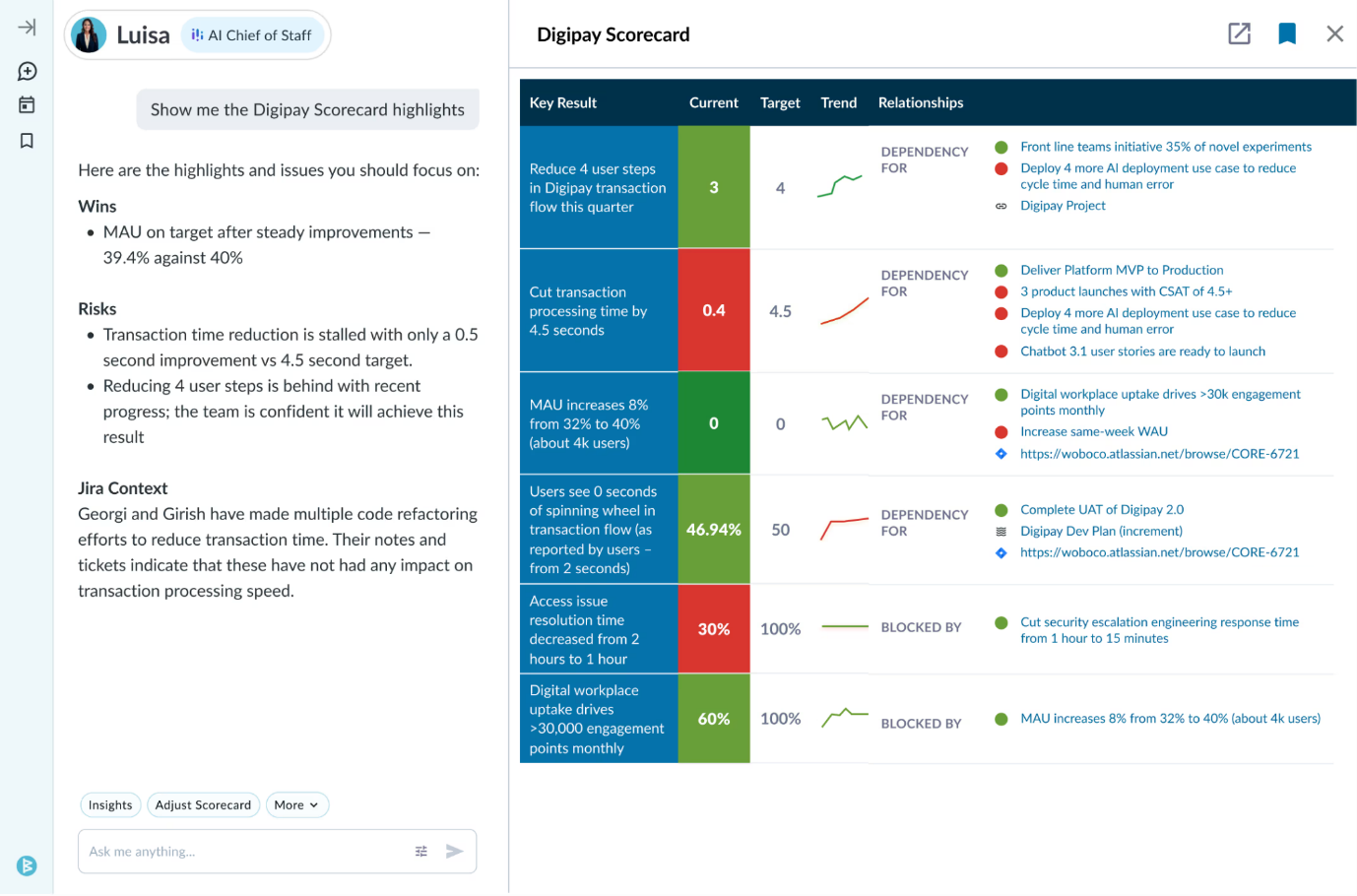
WorkBoard acquired Quantive in May 2025 to provide an enterprise platform built around OKR alignment. Quantive was a standalone enterprise-grade strategy execution platform. However, it was phased out, and its core enterprise functionality was passed on to the new WorkBoardAI platform.
Who It’s Best For
Executive leadership teams with L2 to L3 strategy plans in place. It’s a good fit for businesses looking to structure quarterly reviews and keep teams aligned on short-term goals.
Key Differentiator
A meeting-centric operating rhythm built around OKR reviews. It turns quarterly strategy reviews into structured alignment sessions.
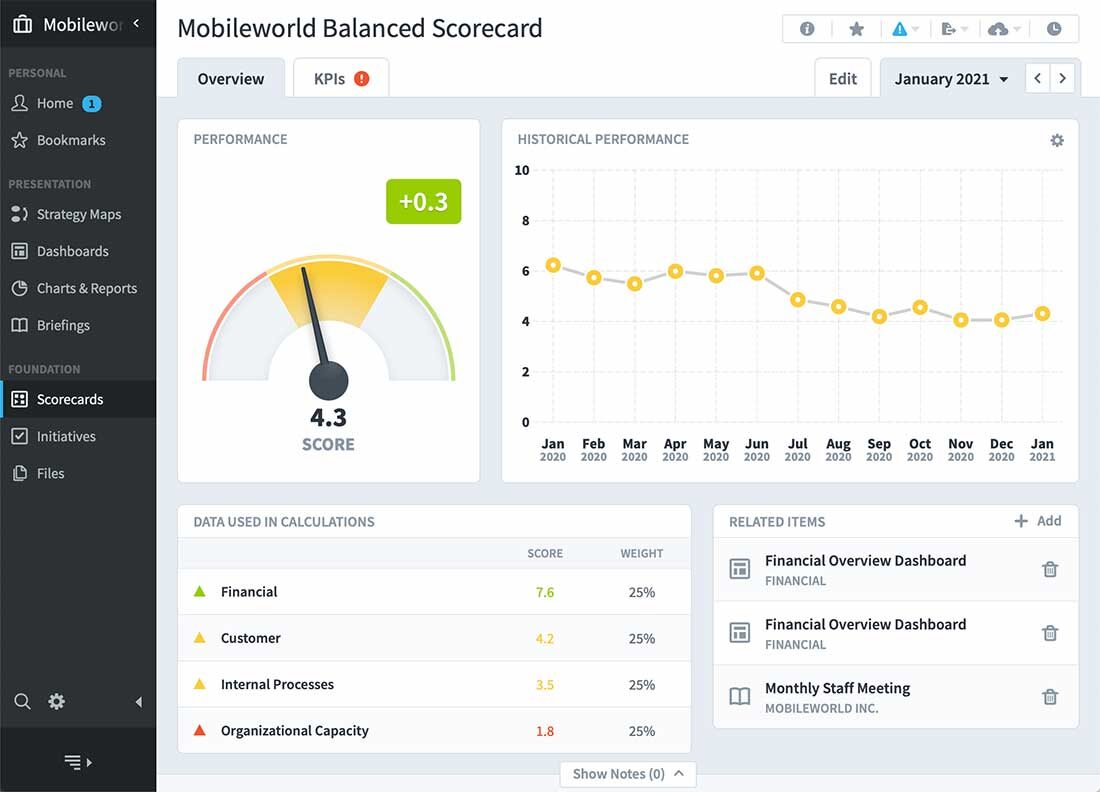
5. Spider ImpactSpider Impact is a performance management platform from Spider Strategies. It’s built around KPI tracking and Balanced Scorecard frameworks.
Who It’s Best For
L1 early-stage and L2 growth-stage organizations managing performance through KPI-driven Balanced Scorecard frameworks. It suits performance management teams transitioning away from static spreadsheets to track operational metrics.
Key Differentiator
Comprehensive KPI scorecards that link operational metrics to strategic objectives.
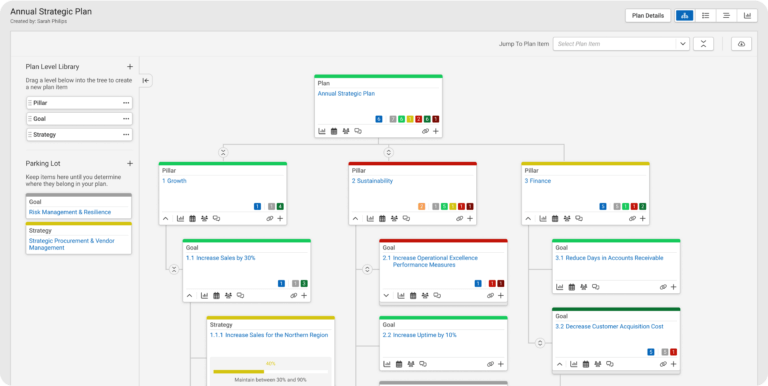
6. AchieveItAchieveIt is a plan execution platform. It tracks initiative progress across distributed organizations.
Who It’s Best For
L1 and L2 multi-location enterprises and regional institutions executing complex plans. It fits distributed organizations that need clear tracking dashboards across separate regional teams.
Key Differentiator
Centralized tracking dashboards that monitor plan execution across separate regional teams.
Choosing by Strategy Execution Maturity
Selecting the right strategy execution management software depends on your current maturity level:
- Organizations operating strategy programs at L1 suffer from manual status tracking. They deal with disconnected spreadsheets and unclear goal visibility.
- L2 organizations face cross-team alignment friction. They struggle with resource bottlenecks and disconnected general project management tools.
- L3 enterprises demand dynamic capital reallocations. They need accountability, governance, value stream oversight and board-level risk transparency.
Rising portfolio complexity and executive pressure to prove ROI usually force an organization up the strategy maturity ladder. L1 and L2 tools aren’t the wrong choice. They may be exactly what a team needs when the primary problem is goal clarity or review discipline. L3 becomes critical when leadership needs confidence that strategic priorities are funded, resourced, and delivered.
And the cost of inaction is high.
PMI research shows that 31% of complex projects fail to achieve their full intended benefits when complexity goes unmanaged.
Selecting an adaptable platform like Planview closes this gap. It ensures your software supports your program as complexity grows, eliminating the need for a disruptive tool migration down the road.
Connecting Strategy Execution to Funding and Delivery
Selecting enterprise software requires focusing on three core facts:
- OKR tracking and Balanced Scorecards are baseline features. They document strategic goals without proving whether funded work delivers value.
- Software must connect top-level goals to portfolio funding and team delivery evidence inside one system of record.
- Planview Strategic Portfolio Management is built for organizations that need to connect strategy execution to portfolio funding, capacity, and delivery in a governed enterprise model.
Bridge the gap between boardroom strategy and delivery teams. Request a personalized demo today and explore our Strategic Portfolio Management solution.
Strategy Execution Management Software FAQs
What Is the Difference Between OKR Software and Strategy Execution Management Software?
OKR tools like Betterworks or Asana focus on goal-setting and quarterly review cadences. Strategy execution management software includes OKR tracking but extends further. It connects strategic objectives to capital funding, resource allocation, and team delivery evidence.
Does Strategy Execution Management Software Replace Balanced Scorecard Tools?
Not necessarily. Balanced Scorecard remains a useful framework for translating strategy into objectives and measures. Strategy execution management software can support scorecard-style planning while extending the operating model into investment decisions, capacity planning, and delivery execution.
How Do I Know if My Organization Needs Enterprise Strategy Execution Software?
Your organization needs enterprise-grade business strategy software when leadership cannot see how capital investments connect to strategic goals. Common indicators include reliance on manual spreadsheets for strategy reviews, frequent project delivery delays, and clear disconnects between executive plans and team execution.